Showing posts with label gear recommendation. Show all posts

Monday, January 18, 2016

Running Injury Prevention

About 2 years ago when I started seriously running and training for the Army Ten Miler, I was cautious about not doing too much too soon, exceeding my limits, injuring myself and subsequently derailing my training program.

Some browsing around the internet found TONS of articles on injury prevention.  Many of the articles provide very similar advice, and two short articles I will share with you below summarize the two key take-aways that have influenced my training routine:  dynamic stretching before the run and GSM (general strength and mobility) exercises after the run. 

This first article explains that static stretching (for example, standing still touching your toes for 30 seconds) does not help you, but dynamic stretching techniques such as the lunge matrix will help you.  I spend 5 minutes before each run doing the lunge matrix or some form of dynamic stretching.  There are videos in this article that show you how to do the lunge matrix.
http://runnersconnect.net/running-injury-prevention/dynamic-stretching-for-runners/

This second article drives home that if you have an hour to exercise each day, you are better off doing 5 minutes dynamic stretching, 45 minutes running, and 15 minutes of general strength and mobility (GSM) exercises than you are to just do 60 minutes of running which is more likely to result in injury, after which you'll be spending 0 minutes per day running because of your injury.  If you click on the "GSM" link in the article, it will take you to Coach Jay Johnson's website where he has videos showing how to do an 8-week progression of GSM exercises after your run.
http://www.coachjayjohnson.com/2014/04/stop-deceiving-yourself-and-find-15-minutes-a-day-to-devote-to-training/

That routine carried me through many miles over many months, and I've added one more element to my routine since then.  The Pentagon Athletic Club gives out a t-shirt for those who log running 1,000 miles.  I began running 20-25 miles per week, and I set a goal of running 1,000 miles in 1 year.

Last March, I was just 11 miles from my goal when I went on a trip to San Diego, and I was so excited to complete my goal with a gorgeous run around Mission Bay.  After parking out on Crown Point, doing my warmup, getting my headphones in and my playlist started, I started off on my run.  About 30 seconds out, I suddenly had a sharp pain in my left knee and came to a screeching halt.  I hobbled along for a little bit trying to see if it would work itself out, but no such luck.  I limped back to the car in disappointment.

I happened to be at a conference with a bunch of Navy doctors and runners at the time and told them what happened.  When I described my symptoms, they told me about "runners knee" and about the IT band that attaches at your hip, goes down the outside of your thigh, and wraps around under your knee cap.  A personal trainer at the base gym taught me how to use a foam roller before my runs on the outside of my thighs to "roll out my IT bands," and she recommended getting one with a hard-plastic core or even just a piece of PVC pipe.

I bought the Foam Rollerpictured above for use at home, and it's been perfect.  When I started traveling for work, I noted that most hotel fitness centers don't have foam rollers, so I bought a compact foam rollerthat fit nicely in my carry-on bag to take with me on travel.

It took me a week or so of rest for the pain in my knee to subside and get back into my running routine, but I was able to complete my goal of 1,000 miles in 1 year toward the end of March.  I also completed my goal of running 1,000 miles in 2015 around the middle of December.

In summary, as it stands now my injury prevention routine consists of doing the dynamic stretching and rolling out my IT bands on the foam roller before going for my run, and doing some general strength and mobility exercises after my run.

Saturday, April 27, 2013

Forerunner versus Fenix


You don't have to read my blog for long to know that I'm a gadget freak.  I love electronic gadgets.  When I go hiking or kayaking, I need a nerdy vest with half a dozen pockets to hold the GPS, the phone, the camera, etc.

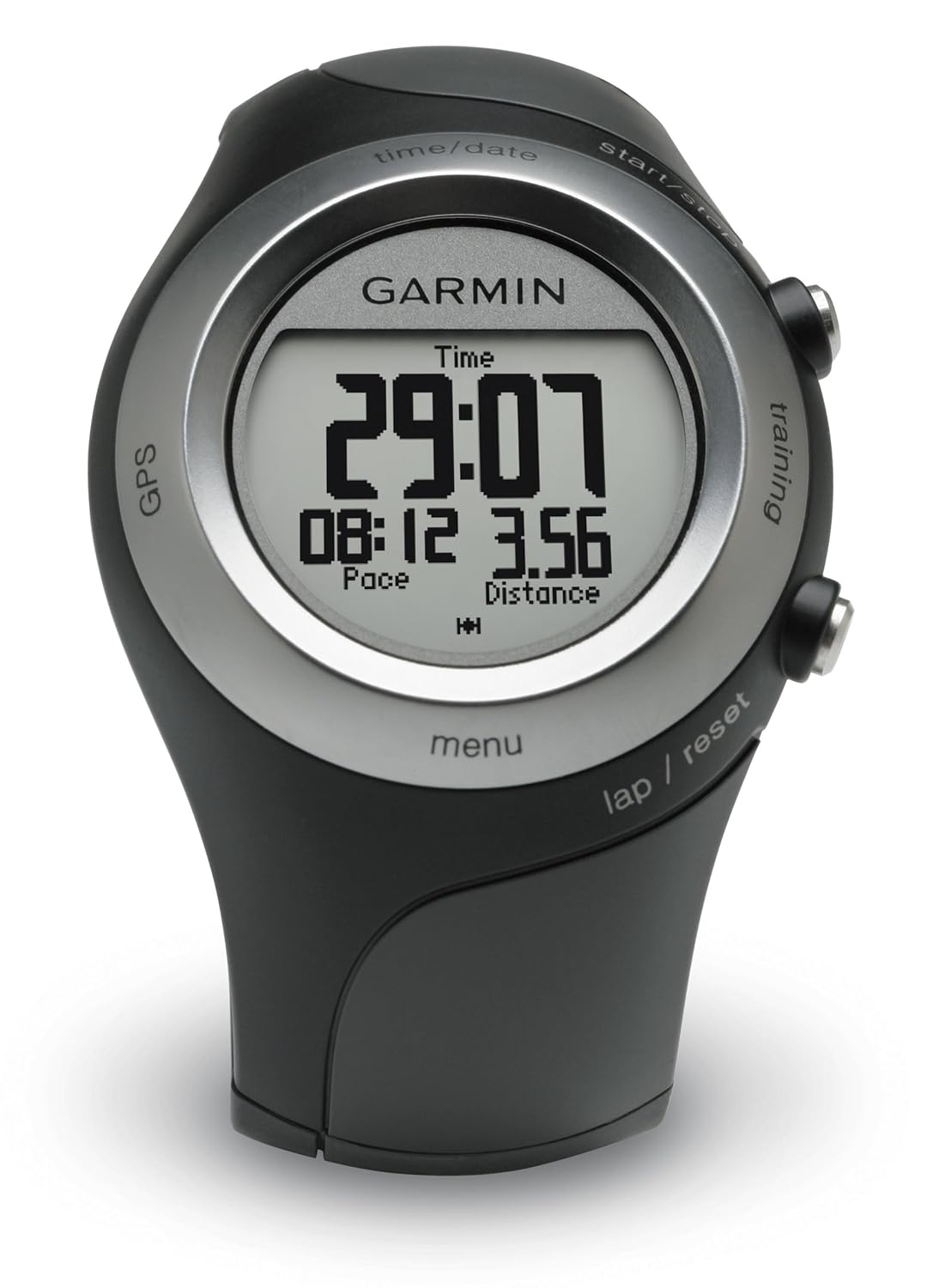
In the category of GPS, I'm a big fan and a stock-owner in Garmin.  I started off with a Garmin 12XL way back in 1998.  When I got bit by the geocaching bug, I upgraded to the Garmin GPSMap 60CSx, which I still love and use a lot.  It was sorta bulky for carrying with me when I went running outdoors, so a few years later my wonderful wife gave me a Garmin Forerunner 405.  There were things I liked and things I didn't like about the Forerunner.

Forerunner Likes
- Compact / Wrist-worn.  As previously mentioned, it was a little awkward running with the bigger handheld GPSMap 60CSx in my hand.
- Automatic Wireless Data Uplink.  I loved that all I had to do was walk into the same room as my computer, and my Forerunner would automatically start wirelessly transmitting the data from my run / hike / kayak / outdoor adventure-du-jour to my computer.  It would upload automatically to the Garmin Connect website where I could see where my outdoor adventure took me on a Google street map or satellite image, along with plots of my altitude, speed, heartrate, and anything else I could want to analyze.

Forerunner Dislikes
 
- Sort of like Gizmo in the movie Gremlins.  DON'T GET IT WET! 

Yes, yes, it's water resistant and wasn't damaged by getting wet.  However, the Forerunner was minimalist on buttons and instead had a touch-sensitive bezel to operate it.  It was pretty cool, but the first time I went running in the rain, oh my!  I discovered it treated every rain drop as a touch and activated all sorts of different sub modes and features.  I think it was telling me how many calories I burned in Swahili, but it wouldn't let my legitimate touches get it back to the display screen that I actually wanted. 

Okay, no problem.  If you push both buttons at the same time, it locks (or unlocks) the bezel.  I would just lock it before going on a hike in the rain or going kayaking where it might get splashed.  I just couldn't change screens or modes while it was wet.

- Battery life was meh.  I could use it one day for a GPS activity outdoors and then would need to recharge it.  If I hadn't recharged it in the previous couple of days, then the battery was likely to die in the middle of my excursion.

Again, no problem.  It was manageable.  I just made a point to put it on the charger the night before any outside activities.

Overall, I liked the Forerunner and used it A LOT.  I've got 153 entries in my Garmin Connect log dating back to October 2008 to prove it, and you can see the Garmin Connect widget on most of my hiking and kayaking blog posts.


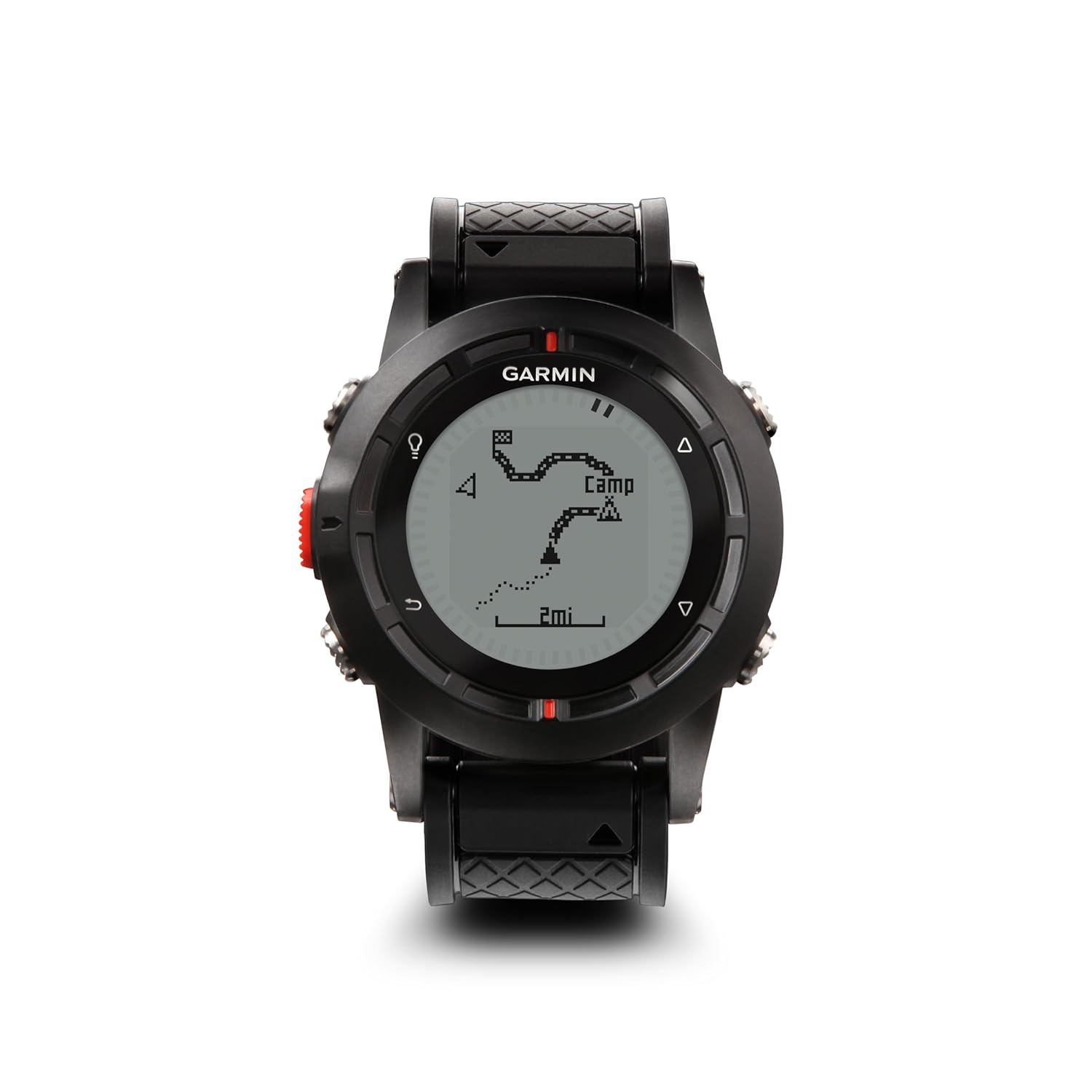
Enter the Fenix.


I was pretty excited when I read about the Fenix on the Garmin website, primarily because it's waterproof and the battery life is much better than the Forerunner.  I got the Fenix in the autumn just before leaving on patrol, so I haven't taken it out on any real outdoor adventures kayaking or hiking yet, but I've been messing around with it on my way to and from work and while at sea.

So far, it's living up to my expectations.

Got wet?  No problem!  It's been pouring rain here and with five buttons on the Fenix, I can do any sort of manipulations I want while it's wet.  No touchscreen to go haywire with rain drops.

The battery has been doing GREAT.  With the old Forerunner, my only battery indication was when the Forerunner DIED (typically in the middle of a run or hike).  The Fenix has a handy indication on the screen to tell you the exact percentage charge status of the battery.  I have been able to use it for weeks at a time just as a watch with the GPS turned off.  I have also used it for several hours at a time standing on the bridge of a submarine with the GPS turned on and had PLENTY of battery capacity left over.

I love that it is very adaptable.  You can have as many or as few screens as you want.  You can customize each screen with different data parameters to display.  You can customize the buttons to do just about anything except order a pizza. 

I like that it monitors temperature and includes that in the plot of speed and other parameters on Garmin Connect.  Now, the temperature reading isn't accurate when it's on my wrist and sensing my body heat, but I've been using it in very cold environments, attached to the outside of my cold weather gear.  I also got one of the remote temperature sensors that I will attach to my backpack when I go hiking in the summertime, and it will wirelessly transmit the temperature to the Fenix at some periodic interval. 

My only complaint about the Fenix is: No automatic uploads.  It doesn't transmit wirelessly like the Forerunner did.  I'm okay with that.  I don't mind plugging in a USB cable.  The frustrating part is when I open Garmin Connect, it "sees" the Fenix is there and plugged in, and I click on "upload activities," and it says there are no activities to upload.  In order to get the data from my Fenix into Garmin Connect, I have to manually open the file and import it into Garmin Connect.  So it's a little labor intensive, but I can live with that.  

Overall, I'm ecstatic with the Fenix, and I'm anxious to go try it out hiking and kayaking now that I'm back in port.

Tuesday, June 1, 2010

Paddle Log #14: Beaver Creek Reservoir

You may recall from our Monocacy River trip a few weeks ago that then-8-year old ES saw another 8-year old paddling his own kayak and decided he would like to have his own, too.  I was excited about this prospect, too, because it will allow me a little more leg room in our tandem kayak than with me and both boys.

I did some research and decided on an Ocean Kayak Frenzy for ES.  The reasons I chose the Frenzy were:
  • We are very pleased with our Ocean Kayak Malibu Two XL, and we also enjoyed paddling an Ocean Kayak Peekaboo while we were on vacation on the Big Island.  
  • The sit-on-top Ocean Kayaks are VERY stable.  Even when I TRIED to flip it over, it was very hard for me to do.  After I had intentionally flipped it over, it was VERY easy to flip it back upright again.
  • After flipping it back upright, it was easy to climb back in and there was no bailing necessary.  There are scupper holes that allow the water to drain.
  • It has positive reviews on various websites like ACK and REI.  
  • It's a nice balance of cost and quality.  It's toward the bottom end of the price range compared to other more fancy kayaks with all sorts of fishing gear and rudders and hatches and cup holders.  At the other end of the spectrum, I noted negative comments in user reviews for other less expensive kayaks about poor construction and stuff breaking.
Last weekend, we picked up an Ocean Kayak Frenzy from the Dulles EMS.  That's where we bought our Ocean Kayak Malibu Two XL last year, and I have been very pleased with how helpful the staff is there, and with their prices.  They were having a big sale last weekend, so we went ahead and made the purchase.

ES and I were both very excited to get out on the water and let him try his new kayak.  At the same time, I was also cautious about going out our first time.  Just like the first time we took the Malibu Two out, I wanted to go someplace with calm, flat water just to test it out, so we went back to the Beaver Creek Reservoir over off of Belmont Ridge Road. 


It was HOT out, too.  It started out about 77F when we arrived at the waterfront about 9 a.m. and had climbed to 90F by the time I got off the water at 1 p.m.


First, the boys and I went for a short paddle across the reservoir and back just to try out ES's new kayak.  One of the selling points for ES on the Monocacy River trip was he saw the family that was with us had a tow line.  When the 8-year old got tired of paddling they just hitched him up on the tow line and pulled him along.  When we bought the Frenzy for ES, we also bought a tow-line, and we tested it out.


Testing the Tow Line

My son complained about the Frenzy being difficult to paddle and steer.  I thought it was just growing pains of him getting used to paddling on his own instead of me doing most of the work.  I found out later I was wrong, but I'll get to that in just a moment.

New must-have for future kayaking trips with the boys:  Waterproof notepad for drawing pictures.  As we enjoyed the peace and scenery along the other side of the reservoir, 6-year old YB drew pictures of what he saw.  It was a great way to keep him occupied and involved today.
 A VERY fitting picture for the first page of this notepad.

Turtle and a pair of dragonflies.

Happy Daddy and a tally of things YB saw today.

After we paddled around for a bit, saw lots of fish jumping out of the water, saw two turtles, and generally enjoyed the peace and tweeting birds in the background, we headed back in to the dock.  I had my wife pick up the boys to take them home.  A friend and his son wanted to try out kayaking, so I had them come down and paddle around for a bit to give it a try.  After they were done, I wanted to see what the Frenzy was like.

 Paddling in the Frenzy

Oh boy.  (Not a good "oh boy" mind you.)

The Frenzy was a big swing-and-a-miss.

I almost immediately realized how frustrated ES must have been when he was trying to paddle.  When comparing different models of kayaks, you will hear the term "tracking" used to describe a kayak's ability to stay on course or move in a straight line.  Well, the Frenzy had the tracking ability of an inner tube.  It required continuous effort to keep the bow pointed in the direction I wanted to go.

Our Malibu Two XL has excellent tracking.  I can stop paddling, pick up my camera, take a picture, put the camera back down, pick up my paddle again, resume paddling, and all that time the kayak will have continued to glide along the same direction it was going when I put my paddle down.

Not so with the Frenzy.  If I put my paddle down to take a picture, by the time I picked my camera up, the bow would have swung 90 degrees off to one side or the other.  With each stroke, the bow swung wildly in the direction of the stroke.

Z. E. R. O. tracking.  None.  Nada.  Zip.  Nil.

I feel bad I didn't listen to ES when he was paddling and just chalked it up to his experience level paddling solo.  After I got home, I washed off the Frenzy and took it back to EMS.  The staff at EMS were very understanding.  They had told me if we tried it and didn't like it that we could bring it back.  We are researching a better kayak for ES now.

In spite of how difficult it was to keep on course, I did enjoy a paddle down to the southern end of the reservoir and back.  I went 2.83 miles in 57 minutes.  It was quite a workout though because I had to continuously paddle to keep on course.  (Aside: That would also be why I only have one photograph to share from my solo paddling in the Frenzy.)  On the way southbound, I was paddling into a light breeze which kept me cool.  Coming back though, I was going with the direction of the wind and the air seemed stagnant around me.  I was pretty overheated by the time I got back.

Stats for the paddle log:
Stats at the end of paddling with the boys.
  • Date: 31 May 2010
  • Time In with the boys: 9:30 a.m. (approx)
  • Time Out with the boys: 10:30 a.m. (approx)
  • Elapsed: ~58 minutes
  • Moving Time (GPS):  51 minutes
    Stopped Time (GPS):  17 minutes
  • Mileage: 1.3 miles by GPS 
  • Avg Speed (GPS):   1.5 mph
  • Max Speed by (GPS):   3.6 mph


  • Stats at the end of paddling solo.
  • Time In solo: noon (approx)
  • Time Out solo: 1:00 p.m. (approx)
  • Elapsed: 58 minutes
  • Moving Time (GPS):  56 minutes
    Stopped Time (GPS):  2 minutes
  • Mileage: 2.8 miles by GPS
  • Avg Speed (GPS):   3.1 mph
  • Max Speed by (GPS):   4.3 mph
  • Sea State: 0
  • Winds: 0-5 kts S
  • Air Temp: 77F at 0900 climbing to 90F at 1300.  It was fairly humid, too.
  • Water Temp: 75-80F

  • Call me a geek, but I tried out two methods of measuring the water temperature today.  The conductive thermometer said it was 80F.  The infra-red thermometer I use for checking the temperature of my car engine said it was 75F.  Either way, the water was pretty nice today.
     
  • Current:   none
  • Gauge Height:  N/A
  • Rapids?  None. 
  • Hazards?  None.
  • Kit: Our Ocean Kayak Malibu Two XL and paddles. Flop hat & sunglasses.  NRS paddling gloves. Long sleeve shirt, swim trunks, Keen sandals.
  • Configuration: I sat in the back seat, YB in the front.
  • Route:  With the boys, we went directly west across the reservoir and back.  During my solo paddle, I went down to the southern tip of the reservoir and back again.  This is the second time my Garmin Forerunner has messed up and combined different data sets.  When I started the first paddle with the boys, I had most definitely reset the Forerunner and started with a trip counter of 0.0.  Yet, viewing it on Garmin Connect, it combined that trip with the previous bike ride I did with YB, so the map is all screwy.  I reset the Forerunner again before I started my solo paddle, and that turned out okay on Garmin Connect.  
  • Other comments (such as wildlife spotted):Turtles, fish jumping out of the water, dragonflies.  Heard a lot of birds, but didn't see any.

Monday, December 14, 2009

THULE Kayak Rack

I meant to post this back in August when we were in New Hampshire. Now, with Christmas fast approaching, I figured I'd go ahead and post it for anyone who needs to find a present for the kayaker in their life.


My wonderful wife bought me a THULE rack (model 883 glide and set) for carrying my kayak on the roof rack. It consists of two front and two back pads on which the kayak rests.


The front two pads are a type of rubberized non-skid material that prevents the kayak from sliding forward or aft.


The back two pads are have a type of felt-lining, so the kayak slides smoothly across these pads.


However, the back pads also pivot. If you pull down on the back of the kayak, then you lift the bow up off the non-skid front pads and can slide the kayak on or off the top of the car.

Tilted up off the front pads.

Down and resting on all 4 pads.

This is a GREAT present for someone who goes kayaking solo (or with small kids) and doesn't really have anyone to help put the kayak on top of the car. Back when I rented the same model kayak in Hawaii and was trying to put it on the car by myself, I imagine it was comical to watch me getting the kayak on the car. I would lift the bow up onto the back of the car, then go back and try lifting the back end and pushing it up on top of the car, and it was very tricky trying to keep it from just sliding off one side of the car or the other.

Not so with this THULE rack. Now I lift the bow up onto the back of the car, and when I go back and lift the back and push it onto the car, the back felt pads guide the kayak into place and keep the kayak from sliding off either side of the car.


We bought my THULE rack at EMS in Dulles, VA, and the staff there were very friendly, professional, and helpful. After we bought it, they came out and installed it on our car for us. Plus, they taught us the trick of twisting the straps.

There is one lingering question in the back of my mind: What will I do when my boys are old enough to have their own kayak and we need to carry more than one kayak on top of the car? I suppose then we'll have to shift to something more stackable that holds the kayaks up on their side, but in the meantime, I REALLY like my THULE kayak rack.

Saturday, August 29, 2009

Tubing on the Shenandoah River

On Saturday, I organized a flat-water tubing trip on the Shenandoah River for my church. Overall: We had a great time floating down the river and the staff at River Riders were very friendly and easy-going.

We met up at 10 for our 10:30 reservation.

By the time we got done with the orientation and safety brief, got our life preservers, and got on the bus, it was 11:41.

They bring the tubes along in a trailer behind the bus.

Note: It's not advertised on their website, but they DO have double-tubes if you have a small child that you want to ride with you instead of letting them go off on independent ops.

The entry point was hard-pack dirt/mud and rocks. They recommend wearing some sort of water shoes or old sneakers, and I can see why.


As for me, I got to try out my new Keen Newport water-sandals. They were very nice, comfortable, and worked like a champ on the slippery rocks in the water.

YB and me in our double-tube.

It turns out that mesh-bottom in one of the holes of the double-tube was a pretty nice feature. It prevented us from losing a few things like YB's crocs.

Unfortunately, my wife's sunglasses slid off the back of her head and into the water. Plunk! Gone. We spent a while feeling around in the brown water, but weren't able to find them.

PLUNK!
Last known photo of my wife's sunglasses.

The boys kept putting on their goggles and looking around underwater trying to find the sunglasses for Mommy.


YB had fun blowing bubbles while he was searching, too.

A couple of people in our group brought footballs along. That was actually a pretty-good idea. We had fun tossing the football back and forth. (See the green football airborne in the image above.)

YB got out of the tube and had fun swimming back and forth to retrieve the football and give it to people. He also took a break to just kick back and float down the river a while.


There were a couple of spots of very light rapids. This short video shows you about as fast as it got.

This orange tube nailed to the tree was the marker telling us where to get out. River Riders runs a bus here every 30 minutes to pick people up. You can either ride the bus back to the beginning and ride the river again, or you can ride the bus back to the River Riders HQ.

The boys looking back the way we came.

Here are a smattering of other notes about our trip:

Timing. River Riders advertises on their website that it takes on average 1.5 hours but anywhere from 1 to 2 hours depending on the current. According to my GPS, we got in the water at 12:10 and got out of the water at 1:30 p.m.

We were a little frustrated with the efficiency of the River Riders operation and our 10:30 reservation got us in the water at 12:10. By the time we got back to River Riders to eat "lunch" it was 2:55 p.m. Lesson learned: They rent tubes you can put a cooler in to float with you down the river. Next time, bring a cooler with snacks and drinks so you aren't starving for lunch.

Weather. Definitely wear sun screen. When we started it was mostly cloudy, but the clouds burned off and the sun came out during our trek down the river.

Water Temp. The water was very nice - I would guess about 75 degrees based on how it felt compared to Lake Winnipesaukee last week. It seemed like the water was never more than about waist deep. The few times I got out of my tube, I was able to stand up.

Bugs. I was pleasantly surprised that we didn't really have any problem with bugs. We saw a lot of dragon flies while we were on the river, but that was it.

Shop. If you forget anything River Riders probably has it for sale in their shop. They seemed to have just about everything in there, including some cool t-shirts with things like, "Paddle Faster!" and "Dude, Where's My Paddle?"

Food. The Front Porch Cafe offered friendly service and pretty decent food, but had a little trouble keeping up with the demand. There wasn't a wait to place your order, but there was a bit of a wait for your food to come out of the kitchen from being cooked.

Today at church, I got a lot of positive feedback on the trip. Everyone seemed to have a good time and said they want to go again. I look forward to organizing a trip like this again.

Sunday, February 8, 2009

Deja vu... Sea story rerun

As I was walking from the bus stop to my office building a couple of days ago, I said to myself, "Self, this headsok ROCKS!" It was 18 degrees out, -1 degree with the wind chill, but my headsok protected my face and kept me nice and toasty warm.

I had a flashback to my first sea tour in Groton and a port call to Esquimalt, British Columbia during my second sea tour. I started composing a blog post in my mind to share those sea stories with you all, but then I had a feeling of deja vu.

I said to myself, "Self, is it possible you've been blogging long enough that you don't remember what you've blogged about before?"

So I did a search on my blog for Esquimalt, and sure enough, I already wrote about it. So hey, if you're new to my blog, I invite you to click the link and read it.

Gear Recommendation (sorry, JT - "Kit" Recommendation for you folks who've been expats for a while):

Get yourself a headsok. Even if you're in a homeport like San Diego, sooner or later you'll have a port call someplace like Esquimalt, BC, or Ketchikan, Alaska, or Yokosuka, Japan in the winter, and you'll be glad you had it tucked away in your locker for just such an occasion.